Alkyl-chain Disorder in Tetraisohexylammonium Bromide (M. A. Kelland and A. L. Thompson)

Acta Cryst.  (2012), C68, o152-o155.    [ doi:10.1107/S0108270112009377 ]

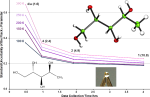
Tetraisohexylammonium bromide [systematic name: tetrakis(4-methylpentyl)azanium bromide], C24H52N+·Br-, is a powerful structure II clathrate hydrate crystal-growth inhibitor. The crystal structure, in the space group P3221, contains one ammonium cation and one bromide anion in the asymmetric unit, … Read the rest

An Integrated X-ray and Molecular Dynamics Study of Uranyl-salen Structures and Properties (G. M. Lombardo,  A. L. Thompson,  F. P. Ballistreri,  A. Pappalardo,  G. T. Sfrazzetto,  G. A. Tomaselli,  R. M. Toscano and F. Punzo)

Dalton Trans. (2012), 41, 1951-1960.    [ doi:10.1039/C1DT11758K ]

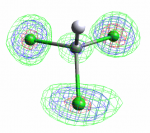
Uranium complexes of bis(p-tert-butyl-salicylidene)-1,2-diphenylethylenediamine (1) and bis(salicylidene)-1,2-diphenylethylenediamine (2) have been synthesized and investigated by X-ray single crystal diffraction and MD calculations in Periodic Boundary Conditions. Both compounds form crystals which are densely packed and do not provide voids accessible to … Read the rest

Methyl 6-amino-6-oxohexanoate & 3-Methoxy-3-oxopropanaminium chloride (T. Gruber, C. J. Schofield and A. L. Thompson)

Acta Cryst. (2012), E68, o593-o594.    [ doi:10.1107/S1600536812003303 ]

The title compound, C7H13NO3, adopts an approximately planar conformation. The torsion angles in the aliphatic chain between the carbonyl group C atoms range from 172.97 (14) to 179.38 (14)° and the r.m.s. deviation of all non-H atoms is 0.059 Å. … Read the rest

CRYSTALS Enhancements:  Absolute Structure Determination (A. L. Thompson and D. J. Watkin)

J. Appl. Cryst.  (2011), 44, 1017-1022.    [ doi:10.1107/S0021889811034066 ]

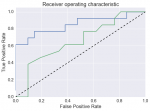
A summary of the features for investigating absolute structure available in the crystallographic refinement program CRYSTALS is presented, together with the results of analyses of 150 light-atom structures collected with molybdenum radiation carried out with these tools. The results confirm that the Flack and Hooft … Read the rest

Chiral Selection in the Formation of Borates from Racemic Binaphthols and Related Diols (J. A. Raskatov, J. M. Brown and A. L. Thompson)

CrystEngComm (2011), 13(8) 2923-2929.    [ doi:10.1039/c0ce00709a ]

A series of racemic or stereochemically labile chiral borate anions based on the 2,20-biphenol motif was
investigated. All borates were homochiral in the solid state, although in some cases the heterochiral
diastereomers were computed to be thermodynamically preferred (DFT). The crystallographic
preference for the homochiral diastereomer was … Read the rest

Practical Applications of Averages and Differences of Friedel Opposites (H. D. Flack, M. Sadki, A. L. Thompson and D. J. Watkin)

Acta Cryst. (2011), A67, 21-34.    [ doi:10.1107/S010876731004287X ]

The practical use of the average and difference intensities of Friedel opposites at different stages of structure analysis has been investigated. It is shown how these values may be properly and practically used at the stage of space-group determination. At the stage of least-squares refinement, … Read the rest

J. Appl. Cryst. (2011), 44, 52-59.    [ doi:10.1107/S0021889810042470 ]

One of the requirements for the next generation of small-molecule crystallographers is a mathematical programming infrastructure. It should provide a modelling design process, where the model formulation is kept separate from the optimization process to provide gains in reliability, scalability and extensibility, enabling the application … Read the rest

Cryst. Rev. (2010), 16(3), 197-230.    [ doi:10.1080/08893110903483246 ]

X-ray single crystal structure analysis has become a gold standard for the determination of molecular geometry. The reliability of the technique is a triumph for science and technology working together. The uniqueness of well-crystalline material intrigued early natural philosophers, and their examinations, followed by the discovery … Read the rest

CRYSTALS Enhancements: Dealing with Hydrogen Atoms in Refinement (R. I. Cooper, A. L. Thompson and D. J. Watkin)

J. Appl. Cryst. (2010), 43, 1100-1107.    [ doi:10.1107/S0021889810025598 ]

Because they scatter X-rays weakly, H atoms are often abused or neglected during structure refinement. The reasons why the H atoms should be included in the refinement and some of the consequences of mistreatment are discussed along with selected real examples demonstrating some of the … Read the rest

Cryst. Rev. (2010), 16(2), 133-144.    [ doi:10.1080/08893110903483238 ]

Recent developments in crystallographic error analysis are described. This report provides an introduction to more-formal work, originally published in Ref. (Haestier, J., J. Appl. Cryst. 2009, 42, 798). Prior to the main discussion, a brief overview of the normal distribution and error-propagation is … Read the rest

© 2012 Chemical Crystallography Suffusion theme by Sayontan Sinha