chem cryst
X-ray Crystallography
University of Oxford


chem cryst news

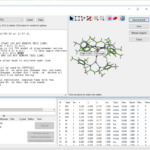
July 2010 >> CRYSTALS Version 14.11 is available as a beta-test.
Many small changes in Regularise Replace thanks to a CRYSTALS workshop in Toulouse organised by Carine Duhayon and Laure Vendier. Cif generator now properly includes esds on refined hydrogen bonds, has incrreased figure-fields for cell parameters, and appends constraint and restraint information as _iucr_ data items at end of cif. Improved scaling of difference Pattersons - see forthcoming paper by Flack, Sadki, Thompson etc. Absolute configuration routine (based on PLATON with Ton's permission) extended to provide more diagnostics and additional data to be re-input as absolute-structure strengthening restraints (see paper by Howard etc above). Error tracking for "USE" files has been improved.
Collaboration with Ernesto Mesto (Dipartimento Geomineralogico - Università degli Studi di Bari) uncovered over-sights in the original 1979 code, which lost contributions when a twin component fell onto a centring absence. Difference maps with twinned data now seem to reveal hydrogen atoms very reliably.


University of Oxford Chemical Crystallography Laboratory

Oxford Diffraction SuperNova

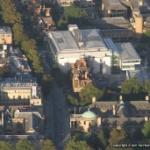
The Chemical Crystallography Laboratory is located in the basement of the new Chemistry Research Lab on the corner of South Parks Road and Mansfield Road. The laboratory contains state of the art crystallographic diffraction equipment, laboratory space for sample preparation, office space for computational and theoretical work.

The Structure Analysis Service is run by Amber Thompson, who has recently joined us from Judith Howards lab in Durham. Members of other groups within Chemistry are encouraged to do their own structural analyses, and space, computers and patient tuition are available for them in the laboratory.
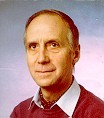
David Watkin's group currently consists of Mustapha Sadki (systems programmer), N. Dave Brown (DPhil), Professor Terry Willis (emeritus) and Kirsten Christensen (academic visitor from Diamond).

Oxford Diffraction (Agilent) have recently installed two SUperNova Diffractometers which sit along side the two existing Enraf-Nonius Kappa CCD instruments

The Chemical Crystallography Laboratory has a long history of involvement in software development. Our software, CRYSTALS (for single crystal X-ray structure refinement and analysis) is used world wide. Oxford University has agreed that the code and exectutables of CRYSTALS can be made Open Source once appropriate copyright messages have been included in all the files. This applies to both educational and commercial uses.
The internal data-structure of CRYSTALS has now (after 30 years) reached its limits, so that major developments to the program have become increasingly difficult. Minor enhancements and bug-fixes continue to be made, so that the program could be maintained into the next decade.
Making CRYSTALS Open-Source has greatly improved the possibility that the internal data structures will be replaced while preserving or enhancing the crystallographic features.


[Home | Crystals | Research | Contact | Lectures | Links | Gallery | | CSD | Chemistry Dept | University of Oxford ]

Crystals Now!  Manuals NOW!

© Copyright Chemical Crystallography Laboratory, Oxford, 2010. Comments or queries to David Watkin - david.watkin@chem.ox.ac.uk Telephone +44 1865 285019. This page last changed on Tuesday 24 August 2010. The website was re-generated on Tuesday 24 August 2010. Choose your nearest mirror for faster access: [ Original | CCP14 UK Mirror ]
Authorised people, edit: this file, news, tree, template, stylesheet. Rebuild website.